
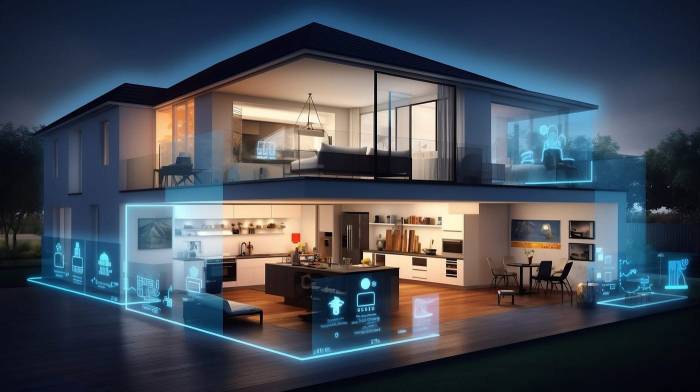
Exploring the impact of smart home technology on our daily lives, this article delves into the ways in which our living spaces are evolving with the integration of cutting-edge technology. From convenience to efficiency, smart homes are revolutionizing the way we interact with our surroundings, promising a future where everyday tasks are seamlessly connected and optimized for our benefit.
Smart Home Technology Overview
Smart homes refer to residences equipped with devices and systems that automate tasks and enhance comfort and security through internet connectivity. These technologies allow homeowners to control various aspects of their home remotely using their smartphones or voice commands, revolutionizing daily living.
Popular Smart Home Devices and Functionalities
- Smart Thermostats: Devices like Nest Learning Thermostat can adjust the temperature based on your habits and preferences, saving energy and ensuring comfort.
- Smart Lighting Systems: Philips Hue bulbs can be controlled remotely to set the mood, save energy, and improve home security by scheduling lights to turn on/off when you're away.
- Smart Security Cameras: Devices like Ring Doorbell offer real-time video monitoring, two-way audio communication, and motion detection alerts for enhanced home security.
Benefits of Smart Home Technology
Smart home technology offers numerous benefits, including increased convenience and efficiency. By automating tasks like adjusting the thermostat, turning off lights, or monitoring security cameras remotely, homeowners can save time and energy. Additionally, these devices can help reduce energy consumption, lower utility bills, and provide peace of mind by enhancing home security measures.
Impact on Daily Living
Smart homes are revolutionizing daily routines and habits by providing convenience, efficiency, and control at our fingertips. With the integration of smart technology, tasks that were once time-consuming or mundane can now be automated or remotely managed, freeing up time for more important activities.
Enhanced Security and Safety Measures
Smart home technology plays a crucial role in enhancing security and safety measures for homeowners. From smart locks and surveillance cameras to motion sensors and smoke detectors, these devices provide real-time monitoring and alerts, giving homeowners peace of mind knowing that their property and loved ones are protected.
In case of any suspicious activity or emergencies, immediate notifications can be sent to the homeowner's smartphone, allowing for prompt action to be taken.
Energy Conservation and Sustainability
Another significant impact of smart homes is the contribution to energy conservation and sustainability. Smart thermostats, lighting systems, and appliances are designed to optimize energy usage based on occupancy patterns and preferences. By automatically adjusting settings or turning off devices when not in use, smart homes help reduce energy wastage and lower utility bills.
Additionally, the use of renewable energy sources such as solar panels can further enhance the sustainability of smart homes, making them eco-friendly and cost-effective in the long run.
Connectivity and Integration
Smart home devices are designed to work together seamlessly, creating a connected ecosystem that enhances daily living experiences. The connectivity and integration of these devices play a crucial role in shaping the future of smart homes.
Interconnected Nature of Smart Home Devices
In a smart home ecosystem, different devices such as smart lights, thermostats, security cameras, and voice assistants are interconnected through a central hub or a common network. This allows these devices to communicate with each other and respond to commands or triggers effectively.
- Smart devices often use protocols like Wi-Fi, Bluetooth, Zigbee, or Z-Wave to establish connections and enable communication.
- These devices can be controlled remotely via smartphone apps or voice commands, providing convenience and flexibility to users.
- Integration with virtual assistants like Amazon Alexa or Google Assistant further enhances the interconnectedness of smart home devices, allowing for voice control and automation.
Importance of Compatibility and Seamless Integration
Compatibility and seamless integration among various smart home products are essential for ensuring a smooth and cohesive user experience.
- Devices from different manufacturers need to be compatible with each other to work together effectively within a smart home ecosystem.
- Standardization of communication protocols and interoperability between devices are critical to achieving seamless integration.
- Cross-compatibility and support for third-party integrations allow users to customize their smart home setup according to their preferences and needs.
Personalization and Customization
In a smart home environment, personalization and customization play a crucial role in enhancing the overall user experience. By allowing users to tailor settings and preferences to their specific needs, smart homes can adapt to individual lifestyles and habits, making daily living more convenient and comfortable.
Adaptive Lighting and Temperature Control
- Smart lighting systems can adjust brightness and color temperature based on the time of day or user preferences, creating the ideal ambiance for different activities.
- Thermostats equipped with smart technology can learn user habits and adjust temperature settings accordingly, maximizing energy efficiency and comfort.
- Customizable schedules for lighting and climate control allow users to create personalized routines that align with their lifestyle.
Voice Commands and Personal Assistants
- Integration of voice-controlled devices like smart speakers enables users to interact with their smart home systems using natural language, adding a layer of personalization to the experience.
- Personal assistants like Amazon Alexa or Google Assistant can learn user preferences over time and provide tailored recommendations or responses based on individual habits.
- Voice commands can be customized to trigger specific actions or routines, making everyday tasks more efficient and personalized.
Future Trends and Innovations
The future of smart home technology holds exciting possibilities that are set to revolutionize daily living. As advancements continue to be made in the field, emerging trends are shaping the way we interact with our living spaces and the devices within them.
Let's explore some of the key trends and innovations that are expected to transform smart homes in the near future.
Voice Control Integration
Voice control technology has already gained popularity with devices like Amazon Echo and Google Home. In the future, we can expect even more seamless integration of voice commands to control various aspects of our smart homes. From adjusting lighting and temperature to managing security systems, voice control will play a central role in creating a truly hands-free and convenient living experience.
Health Monitoring and Wellness Features
Smart home devices are increasingly incorporating health monitoring and wellness features to help users track their well-being and make informed decisions about their lifestyle. This trend is expected to grow, with more advanced sensors and AI algorithms enabling personalized health insights and recommendations based on real-time data collected from smart devices.
Enhanced Energy Efficiency
As sustainability becomes a top priority, smart home technology will continue to focus on enhancing energy efficiency. Innovations such as smart thermostats, energy monitoring systems, and solar power integration are set to optimize energy consumption and reduce environmental impact. The future smart home will not only be convenient but also environmentally friendly.
Augmented Reality and Virtual Reality Integration
The integration of augmented reality (AR) and virtual reality (VR) technologies into smart homes holds immense potential for creating immersive and interactive experiences. From virtual home tours to AR-enhanced maintenance instructions, these technologies will redefine the way we engage with our living spaces, making home management more intuitive and engaging.
Closing Summary
In conclusion, the future of daily living is being shaped by the advancements in smart home technology, offering a glimpse into a world where our homes are not just smart but intuitive and adaptive to our needs. As we embrace these innovations, we are paving the way for a more connected, secure, and sustainable way of living.
FAQ Section
How can smart homes improve security?
Smart homes enhance security through features like remote monitoring, motion sensors, and smart locks, providing homeowners with real-time alerts and control over their property.
What are some examples of popular smart home devices?
Popular smart home devices include smart thermostats, voice assistants like Amazon Alexa, smart lighting systems, and security cameras.
Why is compatibility important in smart home devices?
Compatibility ensures that different smart devices can communicate and work together seamlessly, creating a cohesive smart home ecosystem that functions efficiently.